

Submission: Conservation Amendment Bill
July 2026
About
OraTaiao: Aotearoa New Zealand Climate and Health Council (OraTaiao) is an incorporated society representing over 1,000 health professionals and organisations. We are the largest climate-health advocacy group in Aotearoa New Zealand. We see planetary health as requisite to human wellbeing and have championed equitable and regenerative climate action for 15 years.
OraTaiao is very concerned about the proposed Conservation Amendment Bill (the Bill) and its implications on the management of public conservation land (PCL) in Aotearoa New Zealand. The Bill proposes a fundamental shift in the function of the Department of Conservation (DOC) from one that focuses primarily on conservation to one that promotes economic use and development of public conservation land “to the greatest extent practicable”. We are concerned about the onward effects of this shift in values on Aotearoa New Zealand’s natural environment and on the health and wellbeing of New Zealanders. The purpose of this submission is to explain our strong opposition to the Bill and its significant implications for planetary health and Te Tiriti o Waitangi (te Tiriti)
Read the full submission here
Impact on hauora, health and wellbeing
It is well established that whenua is a key determinant of hauora, health and wellbeing in Aotearoa New Zealand. This is reflected in Sir Mason Durie’s model of hauora, Te Whare Tapa Whā, that is frequently and comprehensively cited across official government material.,
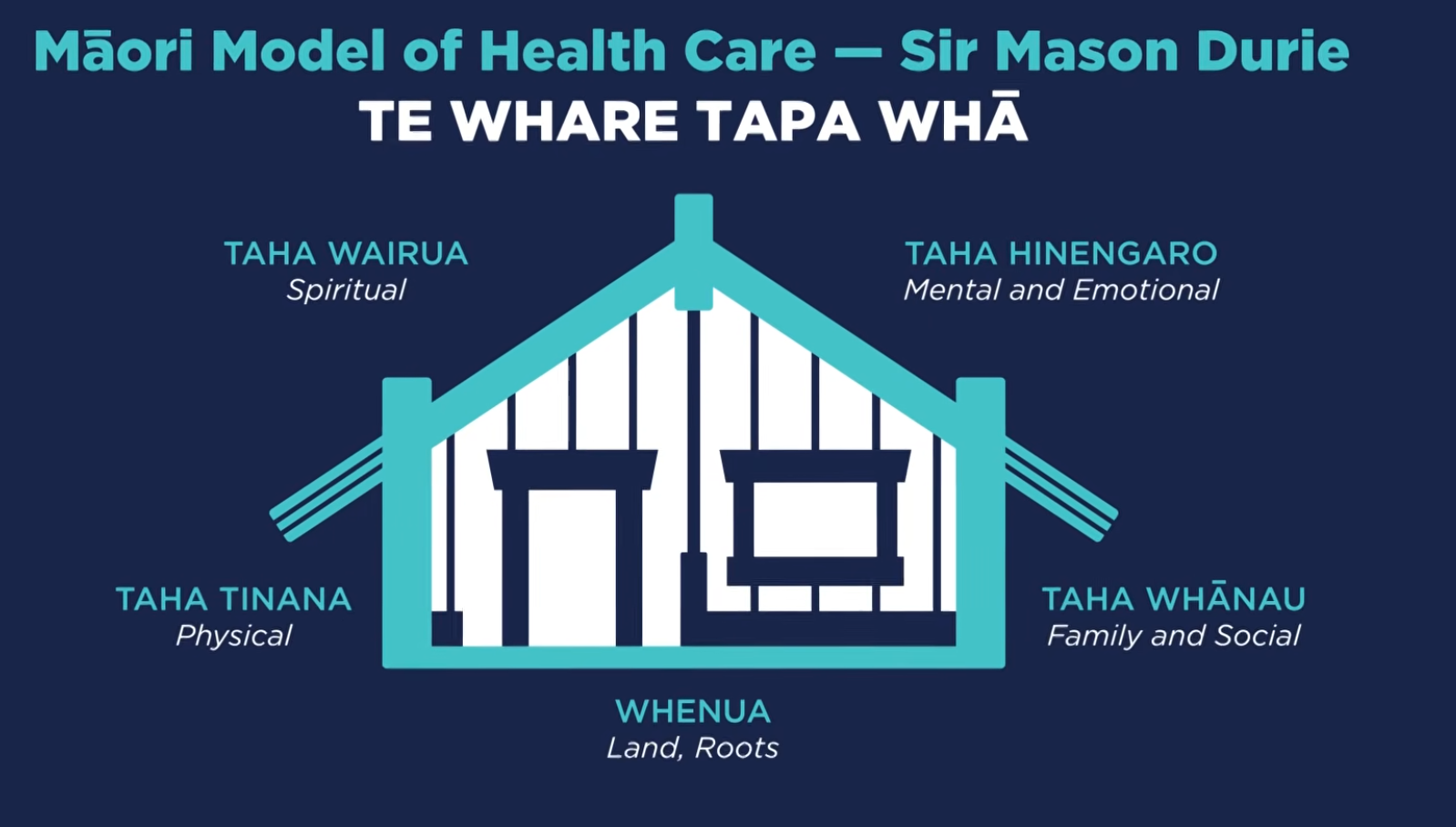
Image 1 - Te Whare Tapa Whā (Durie, 1985) adapted by Ministry of Health (2022)
Whilst we acknowledge that the current model of PCL does not fully reflect the promise of Te Tiriti—particularly Article 2—in recognising the full scope of tino rangatiratanga over whenua and taonga, PCL nevertheless plays a particularly important role in supporting hauora and wellbeing across Aotearoa New Zealand. PCL provides invaluable recreational and restorative spaces that uplift physical, mental, emotional and spiritual health. Many outdoor physical activities, including walking, swimming, fishing and tramping, are enabled through PCL. Evidence is clear that spending time in nature and green spaces has significant health benefits and one of New Zealand’s greatest assets is access to such protected spaces. In turn, a degraded natural environment means a poorer quality of life for all in Aotearoa New Zealand. To weaken protection of this land is short sighted and the potential impact on the health of people today and of future generations is deeply concerning.
The impact on health is also enabled through PCL containing our most important carbon sinks, key in the mitigation of climate emissions and important for protecting human health under climate change. Climate change is responsible for many risks to human health that are recognised by health and science bodies within New Zealand and internationally. Climate and environmental action are crucial for enhancing both human and planetary health and protecting PCL is among the most important ways of doing this within Aotearoa New Zealand.
Ecologically, PCL is home to rich and diverse ecosystems that support biodiversity and provide ecosystem services such as clean air, clean water, and accessible green spaces. These natural environments are important for health because they promote physical activity, reduce stress, strengthen cultural and spiritual connections to the land, and support overall wellbeing through the interconnected health of people and the environment. This is at the core of planetary health. Protecting PCL is therefore not solely a conservation objective; it is a public health intervention that helps mitigate climate change, reduces exposure to climate-related health risks, and safeguards the ecological systems upon which human health depends.
Anti-te Tiriti
Te Tiriti o Waitangi, especially Article 2, is the basis of health equity and environmental protection in Aotearoa New Zealand. Article 2 reflects the strong cultural, spiritual and legal relationship that Māori as tangata whenua have with whenua. Although the Bill does not make any amendments to s4, it does weaken this provision through clause 4A, which limits what DOC is required to do to “give effect to the principles of the Treaty of Waitangi”. Tangata whenua have expressed concern that this clause undermines the Government's commitments under Treaty settlements.
In addition to substantive concern around the Bill, there has been a stark absence of consultation on the objectives of the Bill, and the fundamental shift in DOC’s function that it directs. The Bill concentrates power with the Minister and reduces the influence and oversight of the public and local authority bodies. This risks short-term, politically motivated decision making and the potential for exploitative development of PCL. The ability to fast track commercial development, for instance, mining, on PCL is alarming and consequential for both human and planetary health. Removing important checks and balances in the decision making process is unacceptable for land of such immense public value. Whilst the Bill claims that it may create more opportunities for iwi and hapū, concern has been expressed by tangata whenua that it could limit meaningful consultation, and therefore contravene the promise of te Tiriti.
Disposal of PCL and the removal of ‘red tape’
Following the introduction of the Bill, the Minister announced at the Environmental Defence Society Conference that the Government will rollback the public land sale provisions. Whilst this is responsive to the strong public opposition to this damaging proposal and the Minister has written to the Environment Select Committee (the Select Committee), it is important that the Select Committee do not consider the strong outpouring of opposition only responsive to the disposal mechanism, but the Bill as a whole. As we have stated, the Bill proposes to radically reform the purpose and ethos of PCL in Aotearoa New Zealand, and in so doing put planetary health at risk.
In a Facebook post on Monday 29 June the Minister of Conservation Hon Tama Potaka (the Minister) stated the following:
“I've also asked the Committee to work with conservation groups, Iwi and others to make sure we get these changes right…That means less red and green tape, faster decisions and more certainty for communities and businesses, without lowering the protections that keep these places special.”
This quote must be scrutinised for two reasons. First, it is imperative that “conservation groups, iwi and others”—presumably meaning hapū and communities across Aotearoa New Zealand—are listened to, and this engagement is not mere consultation, but active and reparative engagement. A lot of harm has been done by failing to conduct rigorous and authentic engagement before the Bill was proposed, and the Government and Select Committee must account for this in the retrospective engagement that the Minister is proposing to be conducted.
Second, the Minister signals that the Government wants to reduce regulation without weakening the protections that make these places special. By characterising regulation as "red tape", the Minister frames it as unnecessarily burdensome and obstructive. In doing so, the Minister overlooks the fundamental purpose of regulation in the context of PCL. Regulation is not an administrative obstacle to conservation; it is the mechanism through which conservation is achieved. Robust statutory protections ensure that ecological, cultural and public interests are not displaced by short-term commercial or economic objectives. Weakening those protections necessarily alters the purpose of public conservation land itself. As discussed above, maintaining these protections reflects a cultural value that is widely shared across Aotearoa New Zealand.
Recommendations
OraTaiao opposes the introduction, further development, and implementation of the Conservation Amendment Bill. We strongly recommend that this Bill does not proceed. This Bill threatens human and planetary health, undermines equity, and surrenders alternative healthier futures to obscurity.
OraTaiao respectfully urges the Committee to recommend that the Conservation Amendment Bill does not proceed. Protecting public conservation land is fundamental to protecting the health of current and future generations, meeting New Zealand's environmental obligations, and honouring Te Tiriti o Waitangi.
Ngā mihi,
OraTaiao: Aotearoa New Zealand Climate & Health Council
